

.svg)


.svg)




.svg)

-2.svg)
-1.svg)


.svg)


.svg)
.svg)
.svg)

.svg)

.svg)
.svg)


.svg)

.svg)
.svg)
.svg)
.svg)
.svg)
.svg)
.svg)
.svg)
.svg)


.svg)
.svg)
.svg)
.svg)


.svg)
-1.svg)
.svg)
.svg)
.svg)

.svg)
.svg)

.svg)
.svg)

.svg)
.svg)
.svg)
.svg)
.svg)
.svg)
.svg)


.svg)


About Guest
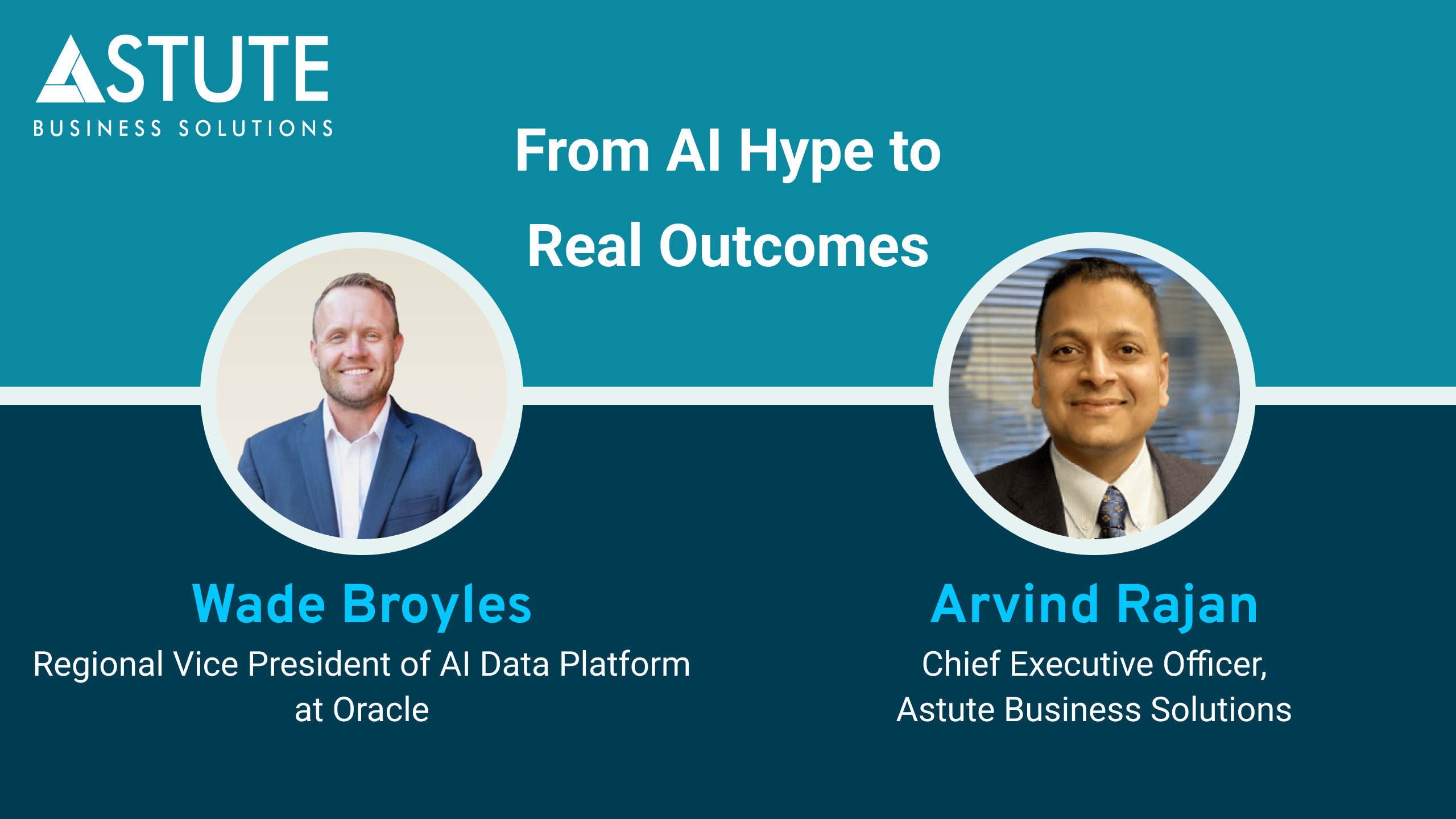
Today’s guest is Wade Broyles, Regional Vice President at Oracle Cloud Infrastructure, where he leads public sector growth and helps organizations modernize with cloud technologies. Wade brings a unique blend of experience across technology, business development, and leadership—having worked with companies like Presidio and Venture Technologies, driving customer relationships and strategic growth.
What makes his journey especially interesting is that he didn’t start in tech—he began as a professional baseball pitcher with the Tampa Bay Rays before transitioning into the world of enterprise technology.
With a background in biomechanics and sports science from the University of Mississippi, Wade combines discipline, performance mindset, and customer-first thinking in everything he does. In today’s conversation, we’ll explore his journey from sports to cloud leadership, his perspective on public sector transformation, and what it takes to build strong relationships in a fast-evolving tech landscape.
AI is no longer a futuristic concept—it’s a present-day imperative. But while the pressure to adopt AI is coming from the top, many organizations are hitting an unexpected roadblock: their data isn’t ready.
In this episode, Arvind Rajan sits down with Wade Broyles, Regional Vice President of AI Data Platform at Oracle, to unpack what’s really happening in the enterprise AI landscape. From stalled pilots to governance concerns, they explore why organizations are pausing before scaling—and what needs to be in place before AI can deliver meaningful results.
The conversation dives into real-world use cases like automating hiring workflows, managing massive document archives, and enabling real-time decision-making for finance leaders. At the core of it all is a powerful shift: instead of moving data to AI, forward-thinking organizations are bringing AI to where the data already lives.
If you're navigating AI adoption—or advising others on it—this episode offers a practical, grounded roadmap to move from experimentation to execution.
Top 10 Highlights / Takeaways
- AI adoption is being driven top-down, but execution is slowing due to governance concerns.
- Most enterprises are still in pilot mode, focusing on low-risk, high-impact use cases.
- Human-in-the-loop AI is the current standard, as trust in fully autonomous systems is still evolving.
- Data governance, lineage, and access control are the biggest blockers to scaling AI.
- AI is already transforming HR workflows, especially in resume screening and reducing hiring cycle times.
- Unstructured data (like documents) remains underutilized, but AI can unlock its value through better indexing and querying.
- Copying data between systems creates staleness and inefficiency—real-time access is key.
- The future is “AI brought to your data,” not the other way around, reducing dependency on centralized data warehouses.
- Natural language querying can drastically reduce decision latency, enabling near real-time insights for leaders like CFOs.
- Successful AI adoption starts with small, fast experiments (“30 for 30”), not massive, multi-year investments.
Why Your AI Strategy Will Fail Without a Data Strategy
Artificial Intelligence has quickly moved from buzzword to boardroom priority. Across industries, executives are asking the same question: “What are we doing about AI?” But while the urgency is real, the path forward is far less clear.
In a recent episode of the AI Driven Enterprise Podcast, Arvind Rajan spoke with Wade Broyles, Regional Vice President of AI Data Platform at Oracle, to explore what’s actually happening on the ground. Their conversation reveals a critical insight: most organizations aren’t struggling with AI itself—they’re struggling with the data that powers it.
The Reality Behind AI Adoption
Despite the hype, enterprise AI adoption is still in its early stages. Many organizations are experimenting with pilot projects—often focused on low-risk, high-value use cases like website optimization or internal process automation.
However, there’s a noticeable hesitation when it comes to scaling these initiatives. According to Wade, this hesitation stems from a fundamental concern: governance.
Leaders are asking tough questions:
- What data is the AI accessing?
- Who has permission to use it?
- How do we prevent sensitive information from being exposed?
These aren’t technical challenges—they’re trust challenges. And until organizations feel confident in how AI systems behave, they’re unlikely to move forward aggressively.
Human-in-the-Loop: The Current Standard
One of the most important trends emerging today is the shift toward “human-in-the-loop” AI. While early narratives around AI often emphasized full automation, the reality is more nuanced.
Businesses want AI to assist—not replace—human decision-making.
Take hiring as an example. Instead of manually reviewing hundreds of resumes, organizations are using AI to filter candidates based on predefined criteria. The AI does the heavy lifting, but humans remain responsible for final decisions.
This approach not only improves efficiency but also builds trust over time.
The Hidden Bottleneck: Data Strategy
If there’s one theme that dominates the conversation, it’s this: AI is only as good as the data behind it.
Many organizations rush into AI initiatives without first addressing their data foundations. The result? Inconsistent outputs, limited scalability, and growing frustration.
As Wade puts it, “Good data in, good data out. Bad data in, bad data out.”
Key challenges include:
- Fragmented data across multiple systems
- Lack of data governance and lineage
- Duplicate and outdated datasets
- Limited visibility into who can access what
Without solving these issues, even the most advanced AI tools will struggle to deliver value.
From Data Movement to Data Access
Traditionally, organizations have relied on centralized data warehouses or lakehouses. The idea was simple: bring all your data into one place, then analyze it.
But this model has its limitations.
Moving data is expensive, time-consuming, and often results in stale information. By the time data is consolidated, it may already be outdated.
The emerging alternative is a paradigm shift: instead of moving data to AI, bring AI to the data.
This approach allows organizations to:
- Query data in real time
- Maintain data in its original systems
- Reduce duplication and storage costs
- Improve governance and security
It’s a more flexible, scalable way to think about enterprise data.
Real-World Impact: Faster Decisions, Better Outcomes
The benefits of this shift are already becoming clear.
Consider a CFO who needs a report comparing budgets versus actuals. Traditionally, this request might take days—or even weeks—to fulfill. Data needs to be gathered, cleaned, and analyzed before a report is generated.
With AI and a strong data foundation, that same query can be answered in seconds using natural language.
This isn’t just about speed—it’s about enabling better decision-making. When leaders have access to real-time insights, they can respond more effectively to changing conditions.
Small Steps, Big Wins
One of the most practical takeaways from the conversation is the importance of starting small.
Rather than launching large, expensive AI initiatives, Wade advocates for a “30 for 30” approach: invest a modest amount of time and resources to solve a specific business problem within 30 days.
This approach offers several advantages:
- Faster time to value
- Lower risk
- Easier stakeholder buy-in
- Clear proof of impact
Once organizations see tangible results, they’re more likely to expand their AI efforts.
A Shift in Who Drives AI Conversations
Another interesting trend is the shift in who initiates AI discussions.
In the past, technology decisions were primarily driven by IT. Today, business leaders are taking the lead.
They’re identifying problems, defining use cases, and looking to IT as an enabler rather than the sole decision-maker.
This shift is significant because it aligns AI initiatives more closely with business outcomes.
Conclusion
AI has the potential to transform how organizations operate—but only if it’s built on a strong data foundation.
As this conversation highlights, the real challenge isn’t adopting AI—it’s preparing for it.
Organizations that invest in data governance, embrace flexible architectures, and start with focused use cases will be better positioned to succeed.
The future of AI isn’t about bigger models or more tools. It’s about smarter data—and the ability to turn that data into meaningful outcomes.